Blog
Why are Wet Rooms such a Popular Design Choice?
Wet rooms have quickly become one of the most popular bathroom design choices of 2025—and it’s easy to see why. Combining sleek aesthetics with practicality and accessibility, they offer a fully waterproofed, open-plan layout that brings a sense of space and luxury traditional bathrooms often lack. This seamless design is highly sought after, creating visual flow and a minimalist feel throughout the room. Suitable for both compact and spacious areas, wet rooms are incredibly versatile and can enhance the value of your home. They also offer a modern, low-maintenance solution that suits contemporary lifestyles. In this article, we’ll explore the many benefits of introducing a wet room into your home.
What is a Wet Room?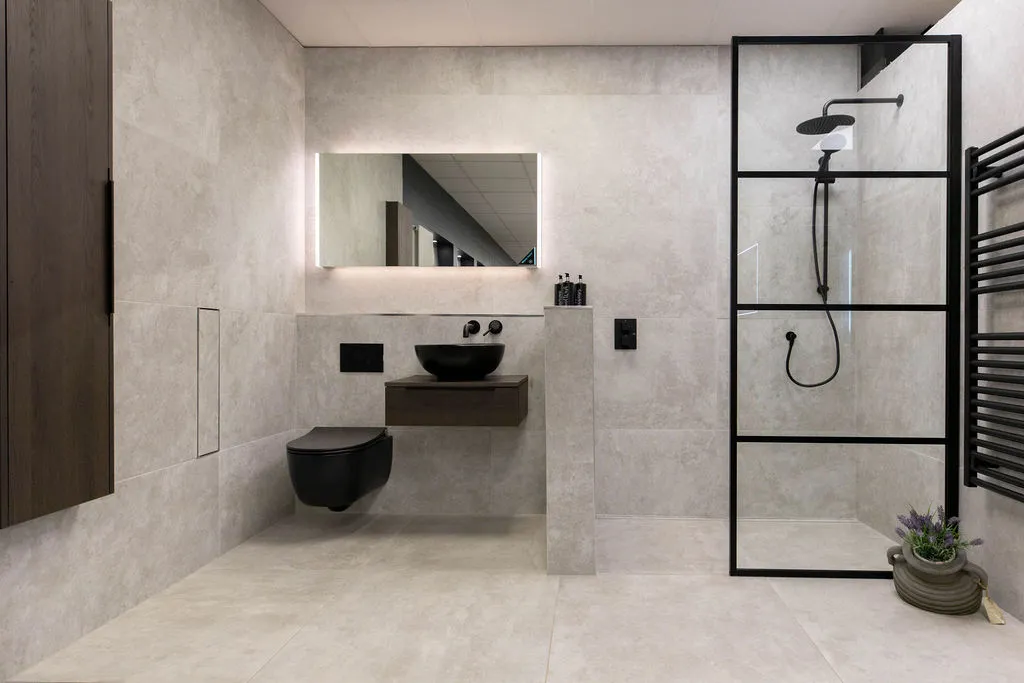
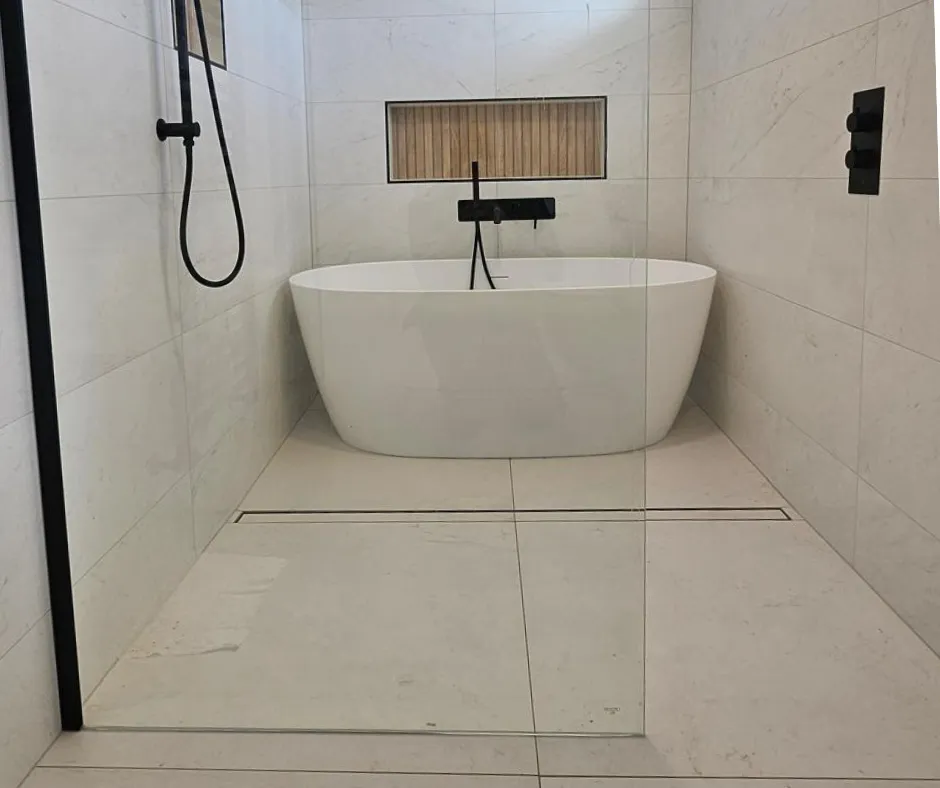
So many people confuse a walk in shower with a wet room. A wet room is a fully waterproofed bathroom where the shower area is level with the rest of the floor. Instead of a raised shower tray, water drains directly through a flush, floor-level drain. The entire space is tanked (waterproofed), which means there’s no need to worry about water splashing beyond a certain area – the whole room is designed to get wet.
This creates a minimalist, open-plan look and makes the space incredibly easy to clean. Whether you want something stylish for a new build or a practical solution for an older property, a wet room can be tailored to suit a variety of layouts and lifestyles.
Wet Room vs Walk-In Shower: What’s the Difference?
While wet rooms and walk-in showers can often look quite similar at first glance, there’s an important difference between the two. Understanding this distinction is key when planning your bathroom. It’s not just about appearance – it’s about how the space is built and how the water is managed. Knowing what sets them apart will help you decide which option best suits your lifestyle, your home, and your design preferences.
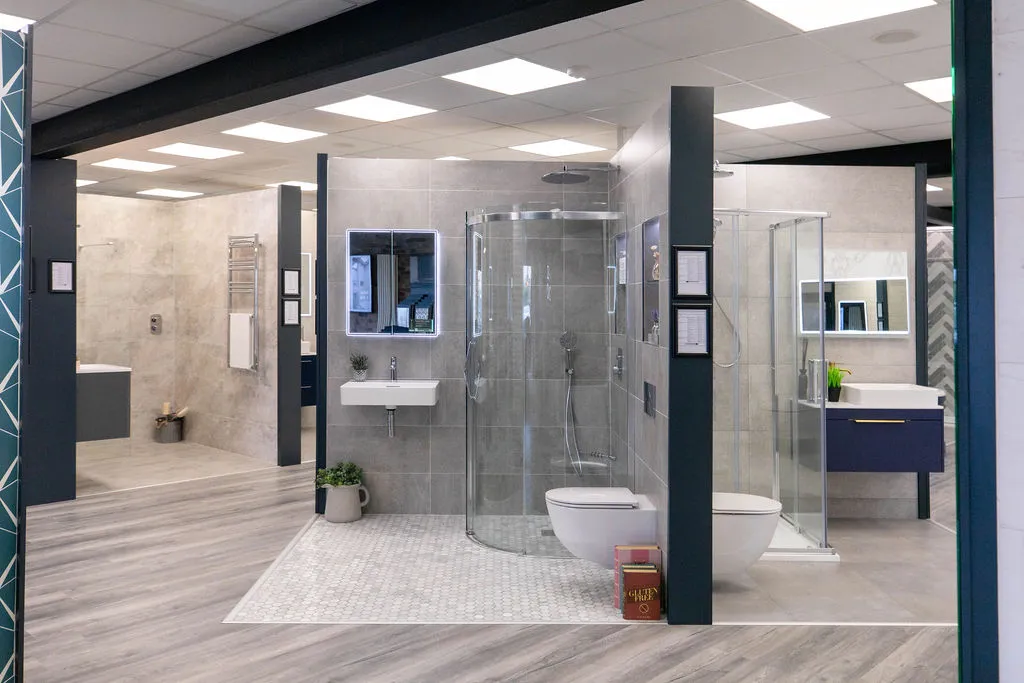 Walk-in showers usually feature a low-profile tray and at least one glass panel. Water is contained to the tray area, and the rest of the bathroom floor remains dry.
- Wet rooms are fully tanked, with no tray at all. The floor is subtly sloped to guide water to a drain, and the whole room is designed to be moisture resistant.
Wet rooms offer a more seamless and open look, while walk-in showers still provide a sense of separation between wet and dry zones. Both are stylish but wet rooms feel more like a luxury spa experience.
Which Homes Should Consider a Wet Room?
Wet rooms are incredibly versatile and suit all types of homes from studio apartments to luxury town houses they are a clever design which can be accessed by many users.
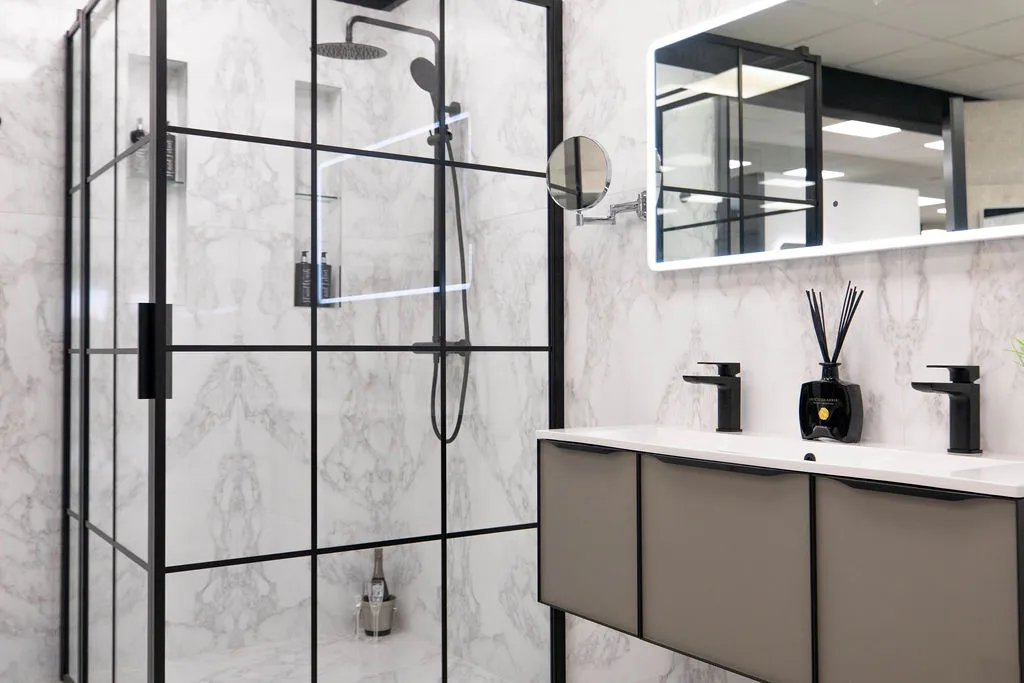 Apartment Living: Wet rooms are actually an excellent option for apartments. The open-plan design helps make smaller bathrooms feel larger and more luxurious. With proper waterproofing and drainage, they’re just as practical as traditional bathrooms.
- Modern New Builds: New builds often have the plumbing flexibility and structural design that make them ideal for wet rooms. They’re also a popular choice for buyers looking for sleek, low-maintenance finishes.
- Historical Properties: You can absolutely have a wet room in a historical home – it’s all about balancing character with modern function. Think traditional vanity units with antique brass fixtures paired with contemporary tiling and invisible drainage.
- Family Homes: With the right tiles and layout, wet rooms are incredibly practical for families – especially with young children. Easy to clean, no trip hazards, and no glass doors to wrestle with.
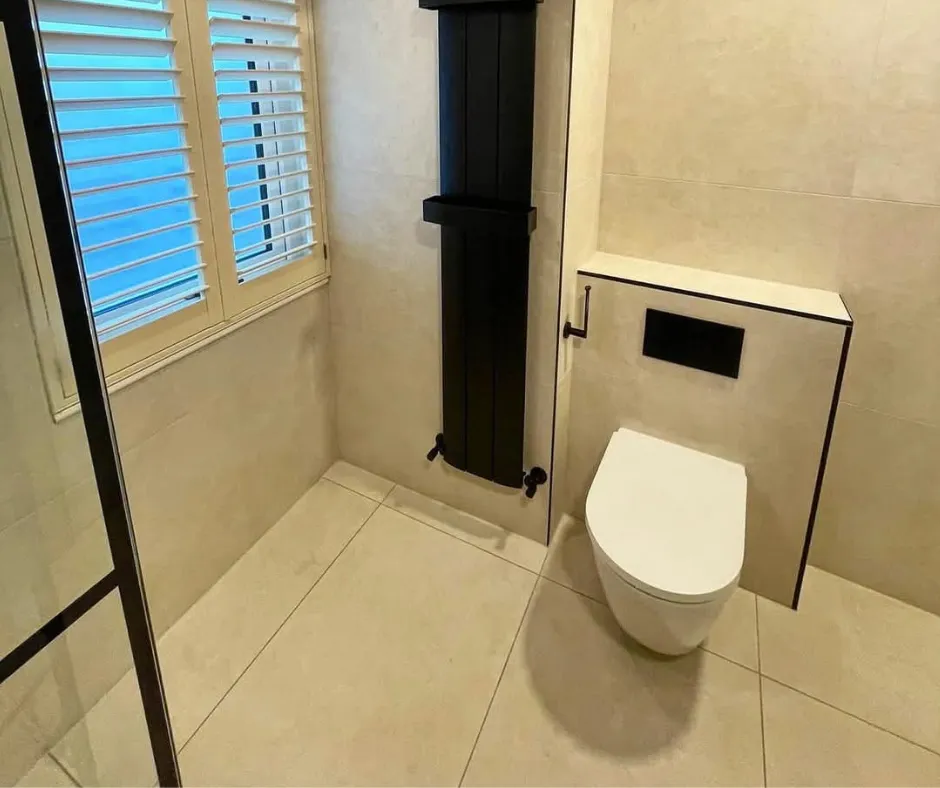
- Retirement Homes: Wet rooms are fantastic for future-proofing – the step-free design is perfect for anyone with mobility concerns. Paired with a wall-hung toilet and grab rails, they can be made fully accessible while still feeling luxurious.
- Ensuites and Attic Conversions: In tighter spaces like attics or ensuites, wet rooms maximise every inch. Sloped ceilings and odd layouts? Not a problem – the open design works with the room rather than fighting against it.
Tiles That Work in Wet Rooms
Since wet rooms let water flow straight onto the floor, picking the right tiles is really important – and it’s not just about how they look. Safety has to come first. You need tiles that aren’t going to be slippery when wet, so you can move around without worrying about falls. At the same time, they have to be tough enough to handle constant splashes and moisture without getting damaged. The right choice will make your wet room feel safe, comfortable, and effortlessly stylish all at once.
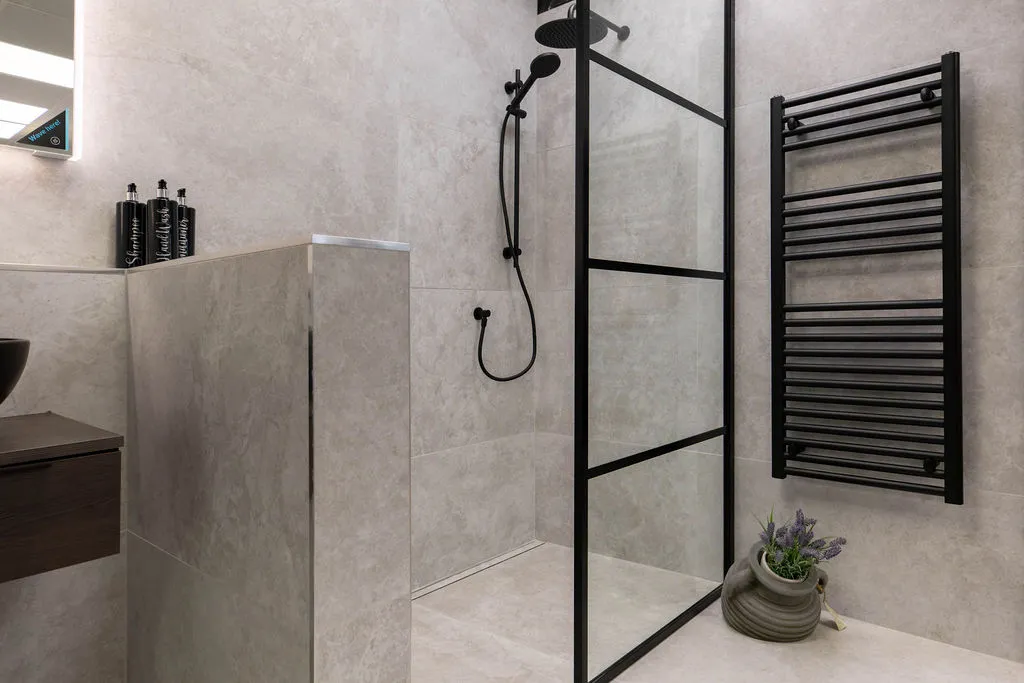
Best tile options include:
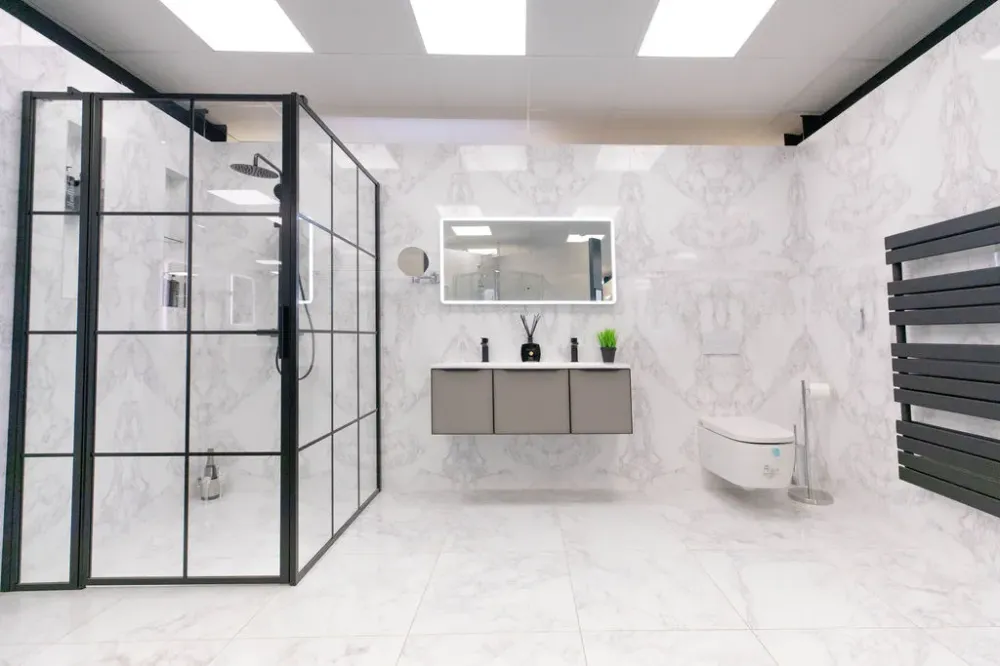
- Porcelain tiles: Durable, non-porous and available in countless styles – from marble-look to concrete finishes.
- Textured tiles: Provide added slip resistance, especially important for flooring.
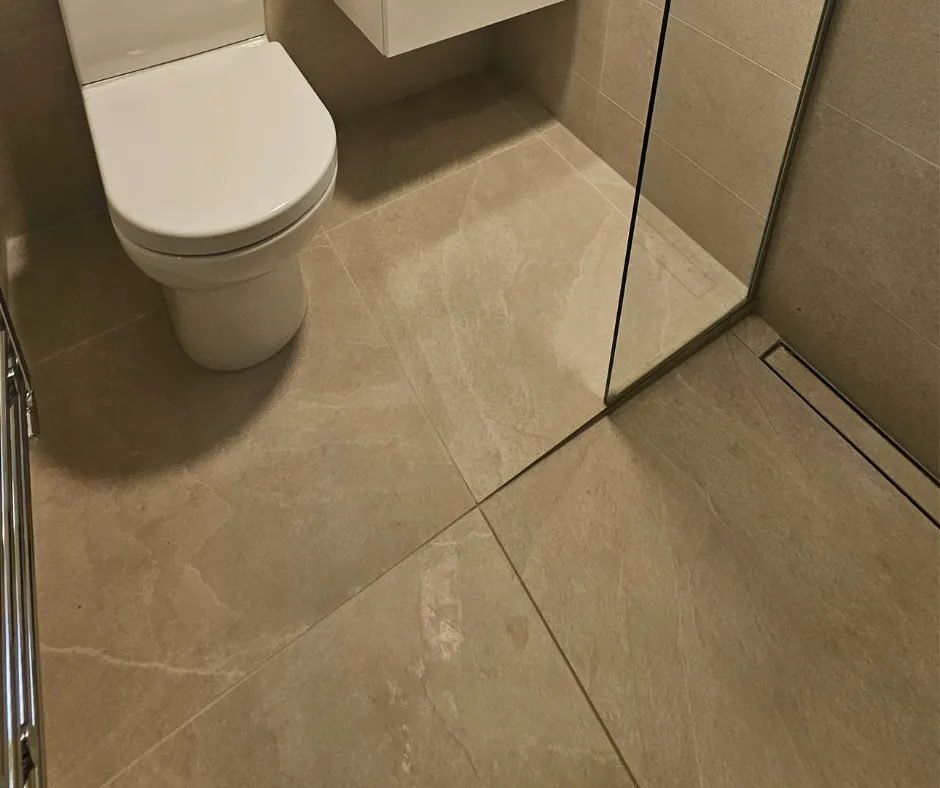
- Large-format tiles: Great for creating a luxe, seamless look with minimal grout lines.
- Mosaic tiles: Often used for the shower area floor, especially where the drain sits, because they can slope gently and handle complex angles.
No matter what style, colour, or material you choose, all wet room floor tiles must be slip resistant. With water constantly present on the surface, safety becomes the top priority. A good slip rating helps prevent accidents and gives you confidence moving around the space, whether it’s a quick morning shower or a relaxing evening wind-down. It’s a simple but essential detail that ensures your wet room is as practical as it is beautiful.
What Type of Drain is Best for a Wet Room?
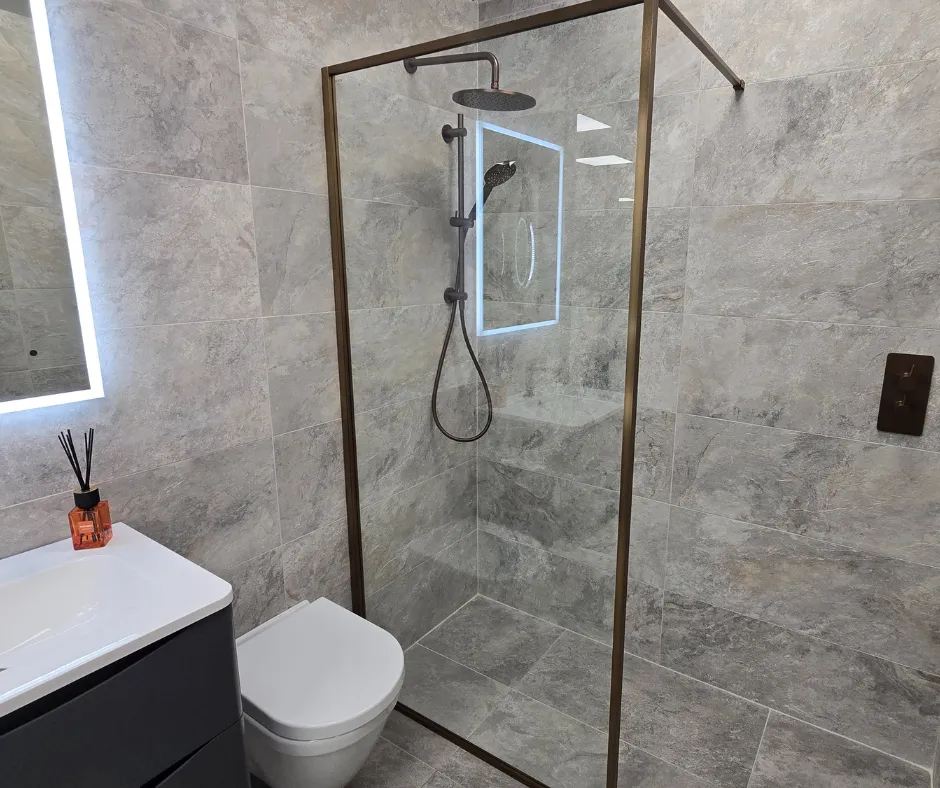 Drains in wet rooms aren’t just about function – they also play a big role in the overall look and feel of the space. A well-chosen drain should work efficiently to remove water quickly, keeping the floor safe and dry, but it should also blend seamlessly with the design of the room. Modern wet rooms often use drains that are sleek and stylish, complementing the tiles and fittings around them. When it comes to choosing, there are two main types to consider:
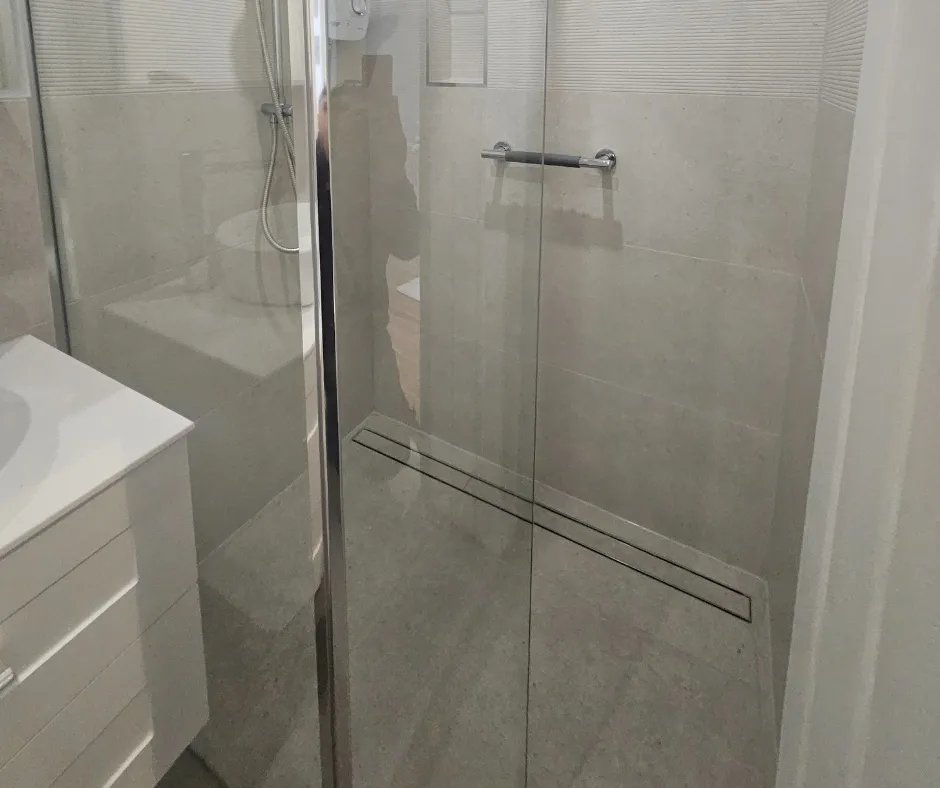
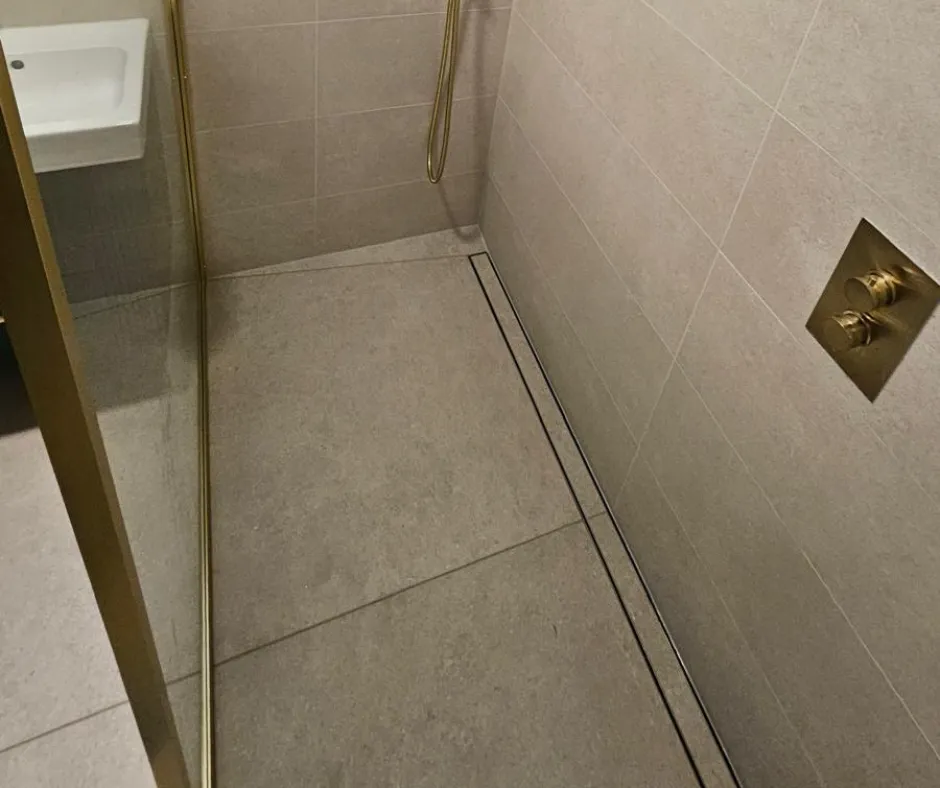
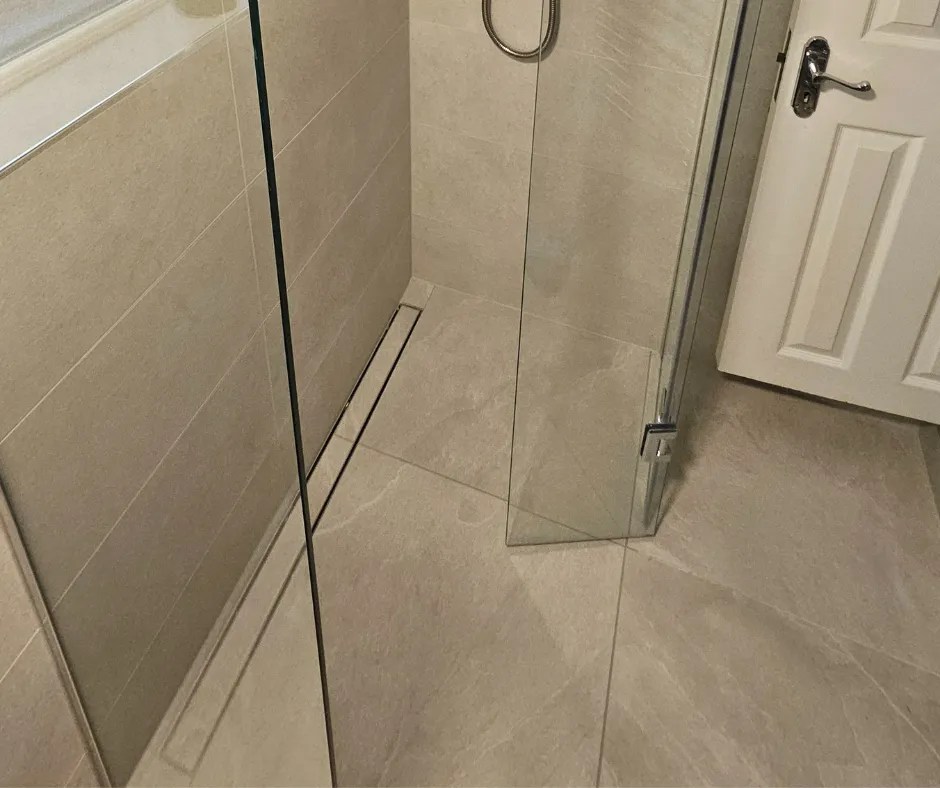
- Linear Drains – Long, slim, and often placed against a wall. These are very popular in luxury wet rooms as they create a clean, modern look and allow for a more subtle gradient in the floor.
- Centre/Point Drains – A more traditional option, placed in the middle of the shower area. These are often combined with mosaic tiles that help form the right slope around the drain.
Many drains come with brushed stainless or matte black covers to match the overall bathroom aesthetic. Whichever you choose, professional installation is essential to ensure correct drainage and avoid pooling.
Wet rooms combine function with elegance – offering a modern solution that’s practical, stylish, and long-lasting. Whether you’re renovating a family home or designing an accessible bathroom for a loved one, a well-planned wet room can transform your space into a sanctuary of calm. If you’d like help designing a bespoke wet room for your home, get in touch with our team – we’d love to bring your vision to life.